Generate Public Ssh Key Windows 10
This article describes ways to generate and use secure shell (SSH) keys on a Windows computer to create and connect to a Linux virtual machine (VM) in Azure. To use SSH keys from a Linux or macOS client, see the quick or detailed guidance.
I'm 'scott' on Windows so my public key is in c:usersscott.sshidrsa.pub. Yours could be in a file you named earlier, be conscious. I'm type'ing (cat on Linux is type on Windows) that text file out and piping it into SSH where I login that remote machine with the user. Nov 10, 2011 How to Generate A Public/Private SSH Key Linux By Damien – Posted on Nov 10, 2011 Nov 18, 2011 in Linux If you are using SSH frequently to connect to a remote host, one of the way to secure the connection is to use a public/private SSH key so no password is transmitted over the network and it can prevent against brute force attack.
Overview of SSH and keys
SSH is an encrypted connection protocol that allows secure sign-ins over unsecured connections. SSH is the default connection protocol for Linux VMs hosted in Azure. Although SSH itself provides an encrypted connection, using passwords with SSH connections still leaves the VM vulnerable to brute-force attacks or guessing of passwords. A more secure and preferred method of connecting to a VM using SSH is by using a public-private key pair, also known as SSH keys.
The public key is placed on your Linux VM, or any other service that you wish to use with public-key cryptography.
The private key remains on your local system. Protect this private key. Do not share it.
When you use an SSH client to connect to your Linux VM (which has the public key), the remote VM tests the client to make sure it possesses the private key. If the client has the private key, it's granted access to the VM.
Depending on your organization's security policies, you can reuse a single public-private key pair to access multiple Azure VMs and services. You do not need a separate pair of keys for each VM or service you wish to access.
Your public key can be shared with anyone, but only you (or your local security infrastructure) should possess your private key.
Supported SSH key formats
Azure currently supports SSH protocol 2 (SSH-2) RSA public-private key pairs with a minimum length of 2048 bits. Other key formats such as ED25519 and ECDSA are not supported.
Windows packages and SSH clients
You connect to and manage Linux VMs in Azure using an SSH client. Computers running Linux or macOS usually have a suite of SSH commands to generate and manage SSH keys and to make SSH connections.
Windows computers do not always have comparable SSH commands installed. Recent versions of Windows 10 provide OpenSSH client commands to create and manage SSH keys and make SSH connections from a command prompt. Recent Windows 10 versions also include the Windows Subsystem for Linux to run and access utilities such as an SSH client natively within a Bash shell.
Other common Windows SSH clients you can install locally are included in the following packages:
You can also use the SSH utilities available in Bash in the Azure Cloud Shell.
- Access Cloud Shell in your web browser at https://shell.azure.com or in the Azure portal.
- Access Cloud Shell as a terminal from within Visual Studio Code by installing the Azure Account extension.
Create an SSH key pair
The following sections describe two options to create an SSH key pair on Windows. You can use a shell command (ssh-keygen) or a GUI tool (PuTTYgen). Also note, when using Powershell to create a key, upload the public key as ssh.com(SECSH) format. When using CLI, convert the key into OpenSSH format prior to uploading.
Create SSH keys with ssh-keygen
If you run a command shell on Windows that supports SSH client tools (or you use Azure Cloud Shell), create an SSH key pair using the ssh-keygen command. Type the following command, and answer the prompts. If an SSH key pair exists in the chosen location, those files are overwritten.
For more background and information, see the quick or detailed steps to create SSH keys using ssh-keygen.
Create SSH keys with PuTTYgen
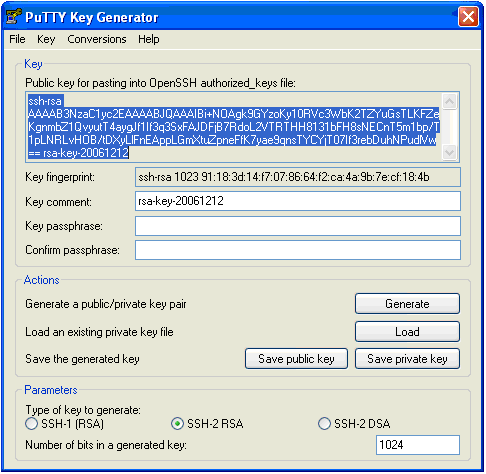
If you prefer to use a GUI-based tool to create SSH keys, you can use the PuTTYgen key generator, included with the PuTTY download package.
Mar 24, 2020 TeamViewer 15 License Key is a software program that helps you to access to any sort of computer anywhere in the world in such a way you read and sending out files about it that it seems your very own computer system. This software aids employers in the workplace to take control that is full desktop computers of their staff, prepare group seminars, and transfer audio and video clip files. Jan 12, 2020 TeamViewer license key + Cracked full version With the current advancement in technology, everything is being done online, and there is a huge need to get connected with other people across the world. There is much more than communication that you will need to do over the internet, and this is why developers have brought. Teamviewer 12 licence key generator. TeamViewer 14 Crack With Serial Key and License Key Download Free. Teamviewer 14 Crack With Patch License Key is free for personal use except to utilize it on a professional scale, so you should purchase a high-quality edition. Teamviewer 12 Crack is software like the Skype sharing display alternative, however using Teamviewer Crack you may access and control another person’s PC.
To create an SSH RSA key pair with PuTTYgen:
Start PuTTYgen.
Click Generate. By default PuTTYgen generates a 2048-bit SSH-2 RSA key.
Move the mouse around in the blank area to provide randomness for the key.
Microsoft Office Professional Plus 2010 Product Key Generator + Crack FreeMicrosoft Office 2010 Professional Plus Full Activated mixes all files in any field it is possible to edit and create with it and all the things you want together. Video editing, Animation painting tool, and broadcast slideshow options are from being commended, some other features which cannot ignore. Instead, the same may be carried out by using dragging and dropping them to sheets. Microsoft office 2010 professional product key generator free. If you continue to hook up with an old version of MS office, subsequently consider using a peek at Office 2007 Professional.
After the public key is generated, optionally enter and confirm a passphrase. You will be prompted for the passphrase when you authenticate to the VM with your private SSH key. Without a passphrase, if someone obtains your private key, they can sign in to any VM or service that uses that key. We recommend you create a passphrase. However, if you forget the passphrase, there is no way to recover it.
The public key is displayed at the top of the window. You can copy this entire public key and then paste it into the Azure portal or an Azure Resource Manager template when you create a Linux VM. You can also select Save public key to save a copy to your computer:
Optionally, to save the private key in PuTTy private key format (.ppk file), select Save private key. You will need the .ppk file later to use PuTTY to make an SSH connection to the VM.
If you want to save the private key in the OpenSSH format, the private key format used by many SSH clients, select Conversions > Export OpenSSH key.
Provide an SSH public key when deploying a VM
To create a Linux VM that uses SSH keys for authentication, provide your SSH public key when creating the VM using the Azure portal or other methods.
The following example shows how you would copy and paste this public key into the Azure portal when you create a Linux VM. The public key is typically then stored in the ~/.ssh/authorized_key directory on your new VM.
Connect to your VM
One way to make an SSH connection to your Linux VM from Windows is to use an SSH client. This is the preferred method if you have an SSH client installed on your Windows system, or if you use the SSH tools in Bash in Azure Cloud Shell. If you prefer a GUI-based tool, you can connect with PuTTY.
Use an SSH client
With the public key deployed on your Azure VM, and the private key on your local system, SSH to your VM using the IP address or DNS name of your VM. Replace azureuser and myvm.westus.cloudapp.azure.com in the following command with the administrator user name and the fully qualified domain name (or IP address):
If you configured a passphrase when you created your key pair, enter the passphrase when prompted during the sign-in process.
If the VM is using the just-in-time access policy, you need to request access before you can connect to the VM. For more information about the just-in-time policy, see Manage virtual machine access using the just in time policy.
Connect with PuTTY
If you installed the PuTTY download package and previously generated a PuTTY private key (.ppk) file, you can connect to a Linux VM with PuTTY.
Generate Ssh Key Windows Cmd
Start PuTTy.
Fill in the host name or IP address of your VM from the Azure portal:
Select the Connection > SSH > Auth category. Browse to and select your PuTTY private key (.ppk file):
Click Open to connect to your VM.
Next steps
For detailed steps, options, and advanced examples of working with SSH keys, see Detailed steps to create SSH key pairs.
You can also use PowerShell in Azure Cloud Shell to generate SSH keys and make SSH connections to Linux VMs. See the PowerShell quickstart.
If you have difficulty using SSH to connect to your Linux VMs, see Troubleshoot SSH connections to an Azure Linux VM.
You can generate an SSH key on Windows using the PuTTY SSH client. You can download PuTTY for free from this URL.
To generate a key with PuTTY, you should:
- Download and start the puttygen.exe generator.
- In the 'Parameters' section choose SSH2 DSA and press Generate.
- Move your mouse randomly in the small screen in order to generate the key pairs.
- Enter a key comment, which will identify the key (useful when you use several SSH keys).
- Type in the passphrase and confirm it. The passphrase is used to protect your key. You will be asked for it when you connect via SSH.
- Click 'Save private key' to save your private key.
- Click 'Save public key' to save your public key.

For more information on how to load the key and connect via SSH using PuTTY, please check this tutorial.
Generate Public Ssh Key Windows 10 Free
You find this article useful? Click here to learn more about SiteGround web hosting experts and what else we can do for you!